Case studySaaS platform Livehorecio.com ↗
Horecio
Reputation and operations for hotel, restaurant and café groups — every venue, every review, one dashboard.
- Role
- Sole full-stack engineer
- Timeline
- Ongoing
- Stack
- React, NestJS, PostgreSQL
- Jobs & APIs
- BullMQ, Meta, Google
The problem
A group running five venues has five Google profiles, five Instagram and Facebook pages, and five sets of reviews coming in every day. Someone has to read them all, answer the bad ones fast, and still report to the owners on how each place is doing.
In practice that means a manager logging in and out of a dozen tools, and reviews that sit unanswered for days.
How it runs
Multi-venue setup
Each group connects its establishments once. Role-based access means managers only see the venues they run.
Review aggregation
Horecio pulls reviews and ratings from Google Business Profile and Meta for every venue into one inbox, with read/unread tracking.
AI-assisted replies
Negative or unanswered reviews get flagged, and an AI drafts an on-brand reply. The manager edits or approves it.
Sales & footfall forecasting
Background jobs crunch sales data and attendance trends per venue, so managers can plan busy nights and staffing.
Consolidated reporting
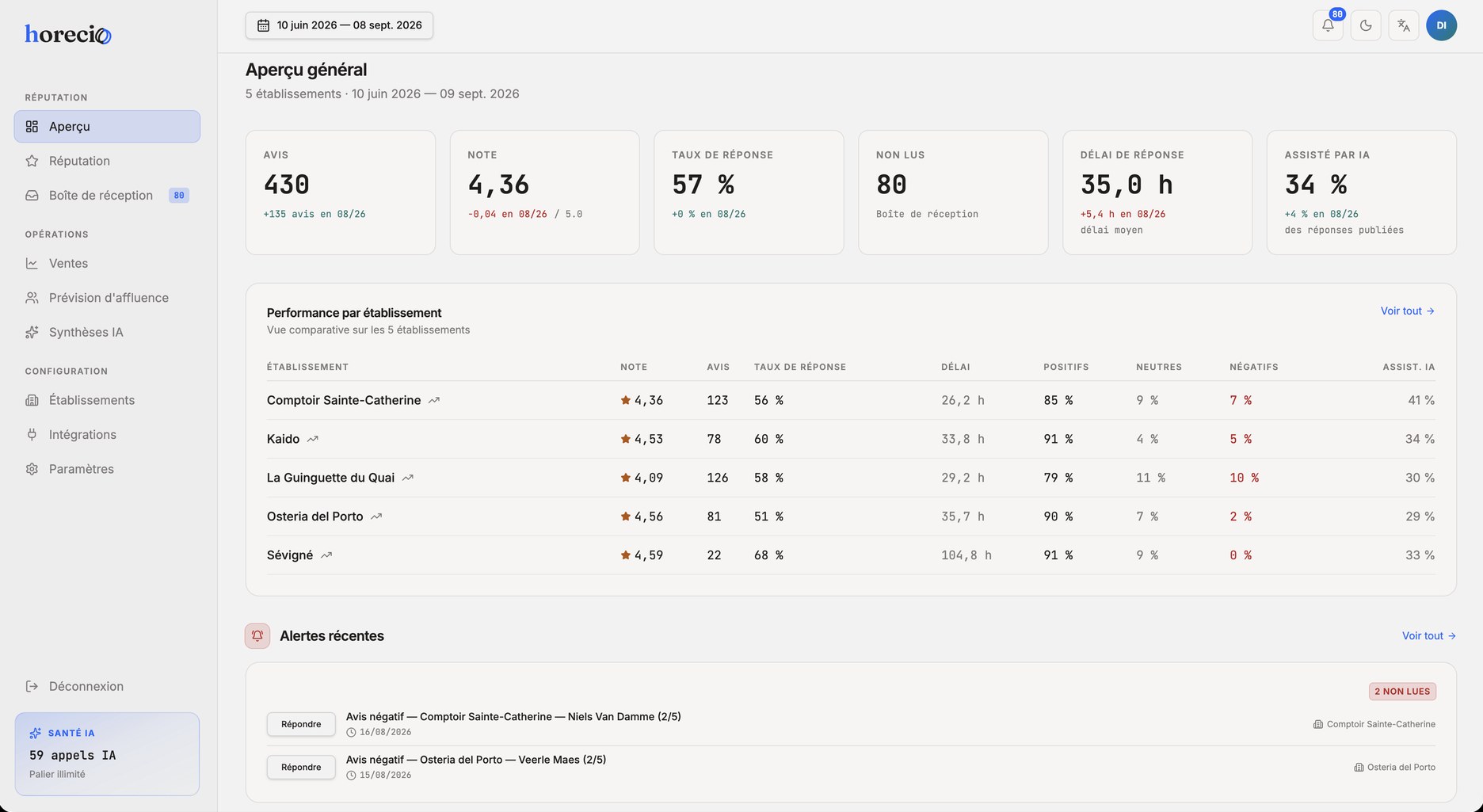
One overview rolls up rating, review volume, response rate and sentiment across every establishment.
What’s inside
Multi-venue dashboard
Rating, review volume, response rate and sentiment for every venue, side by side.
AI-assisted replies
On-brand draft responses, with adoption tracked per venue.
Unified review inbox
Every Google and Meta review in one place, read/unread per venue.
Sales & footfall forecasting
Tracks trends and predicts attendance for each establishment.
Multi-tenant architecture
Complete data isolation per group, role-based access to venues.
Integrations hub
Meta Graph API and Google Business Profile connections managed per venue.
Got a process like this eating your week?
Tell me what it is. I'll tell you honestly whether software should be doing it.